Procurement steps can lose context when information moves between people and tools.
All case studies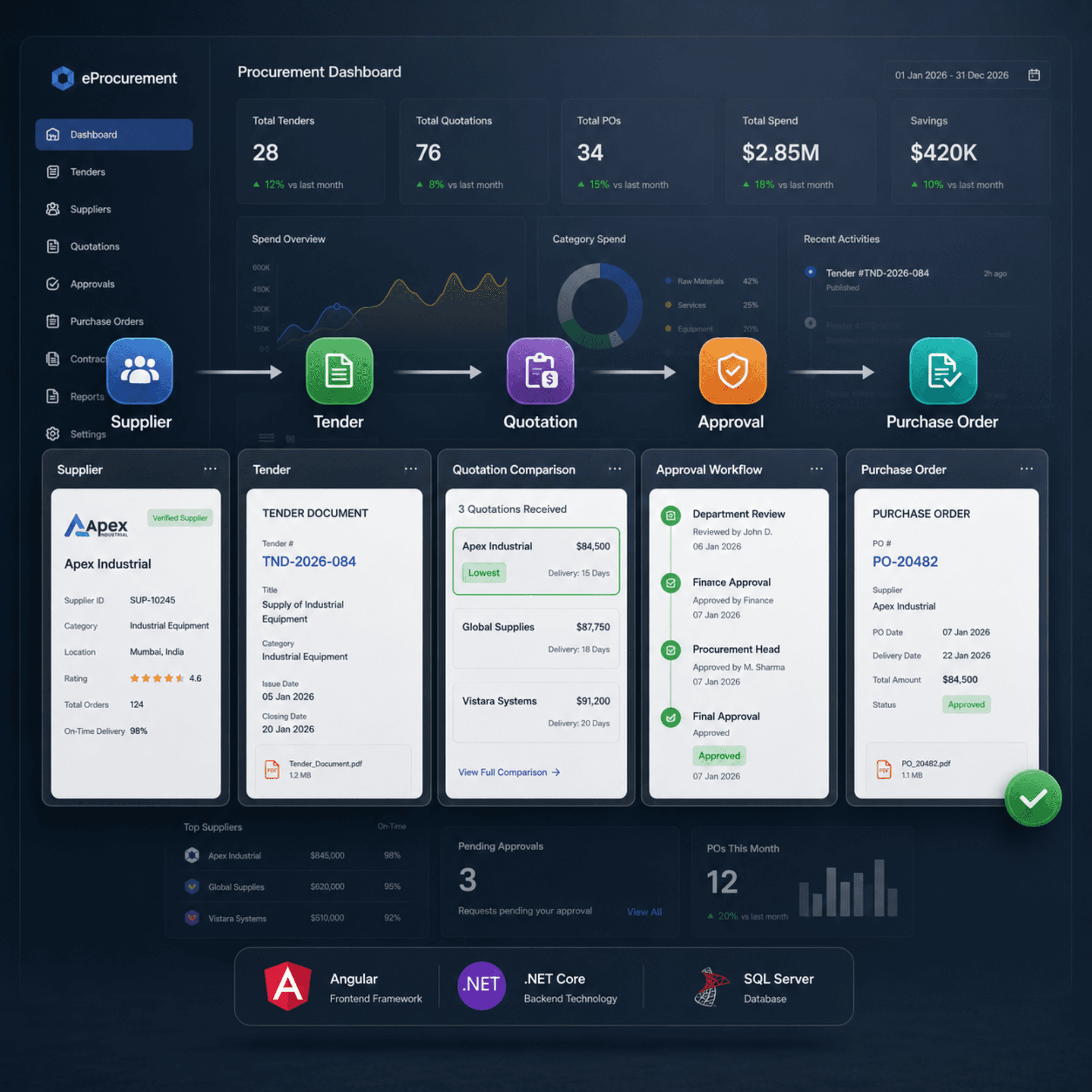
Private Case Study · Procurement
E-Procurement Management System
A procurement management system designed to connect suppliers, tenders, quotations, approvals, purchase orders, and reporting in one controlled workflow.
The situation
Start with how the work happens today.
Procurement becomes difficult to manage when requests, supplier details, comparisons, approvals, and purchase decisions exist in different places.
The system was shaped around bringing those stages into a visible process, while respecting the roles and approvals required at each point.
This private case study focuses on the decision-making structure rather than client details or purchasing data.
Constraints & trade-offs
The difficult parts are where the product thinking begins.
Approvals need visibility without creating unnecessary delay.
Supplier and quotation decisions need a traceable record.
How it was approached
Turn the problem into a useful product decision.
01
Connected tender, quotation, approval, and purchase-order stages.
02
Designed role-aware workflows for the people making and reviewing decisions.
03
Centralised records for clearer reporting and follow-up.
What readers can use
A simple way to prepare for a similar project.
01
Describe the workflow before listing the features.
02
Identify the people, data, and hand-offs that must stay connected.
03
Make the important trade-offs visible before development begins.
04
Start with the smallest release that creates a meaningful operational improvement.
What improved
A clearer path for the people doing the work.
01
A more visible procurement process.
02
Clearer approval and supplier decision trails.
03
Less dependence on disconnected records.
A similar problem?